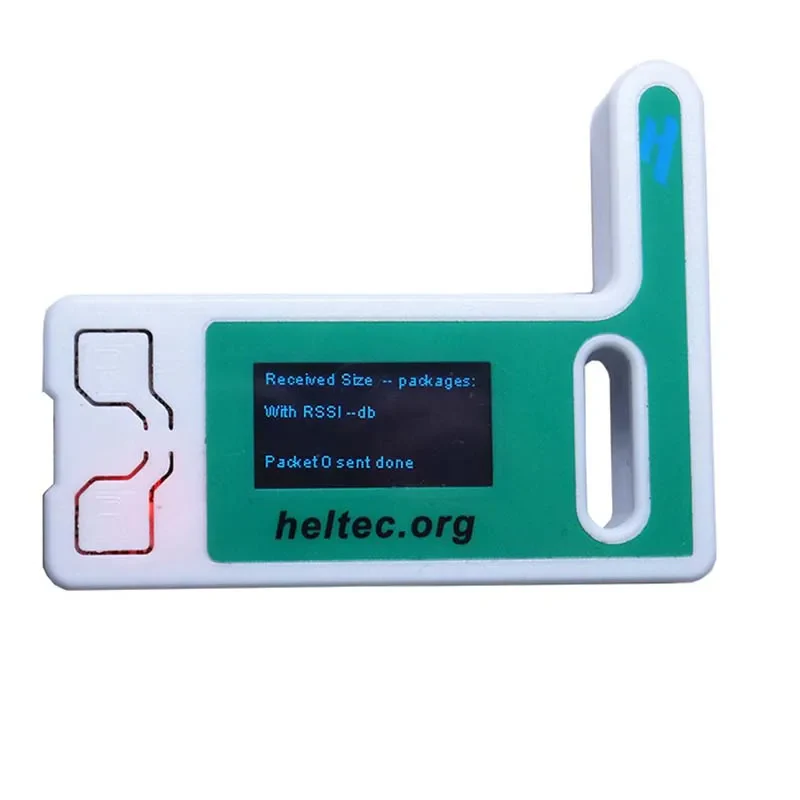
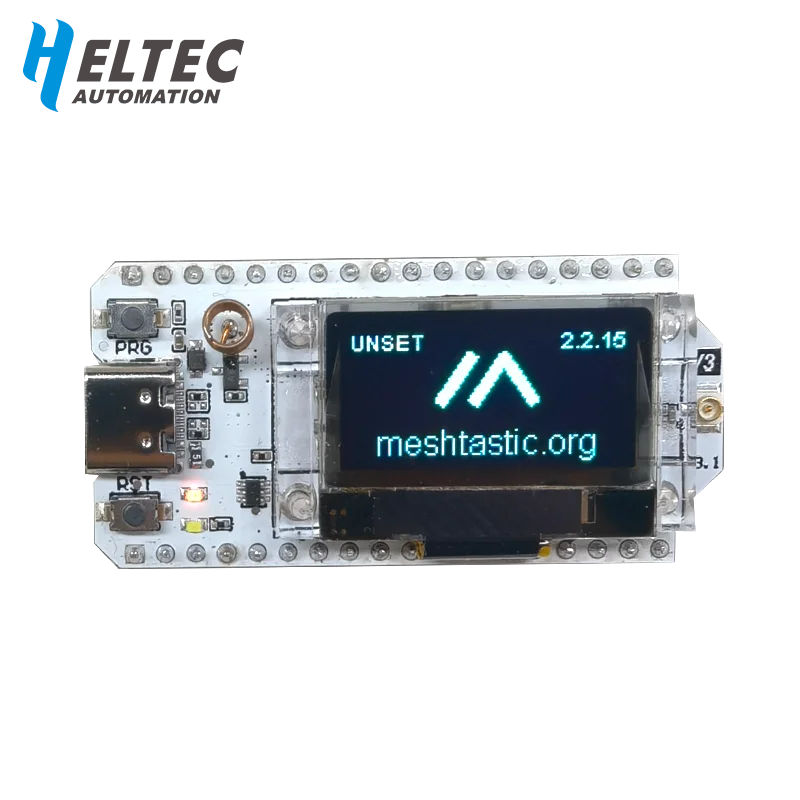
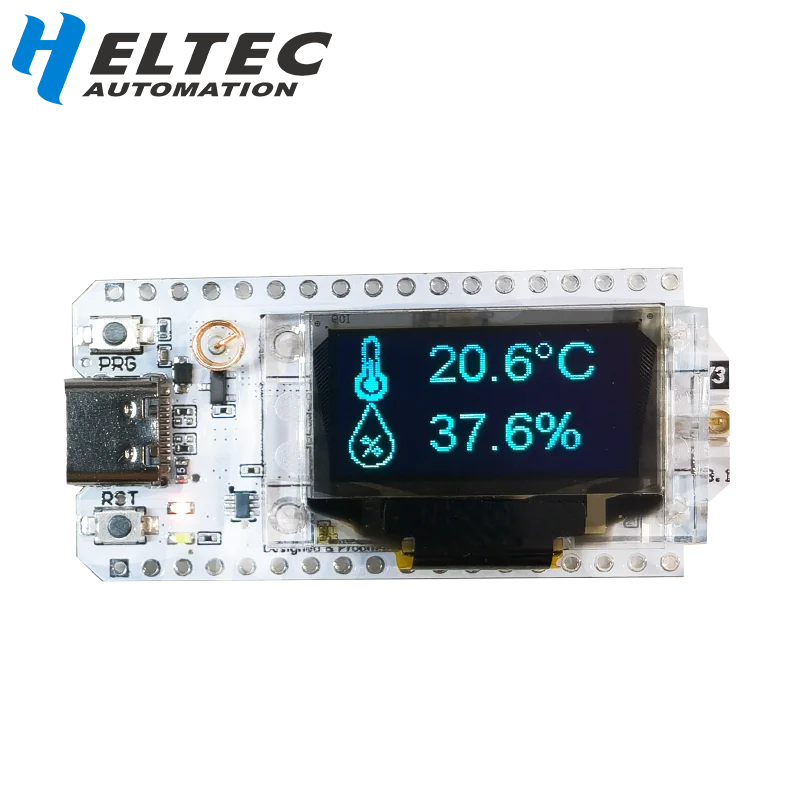
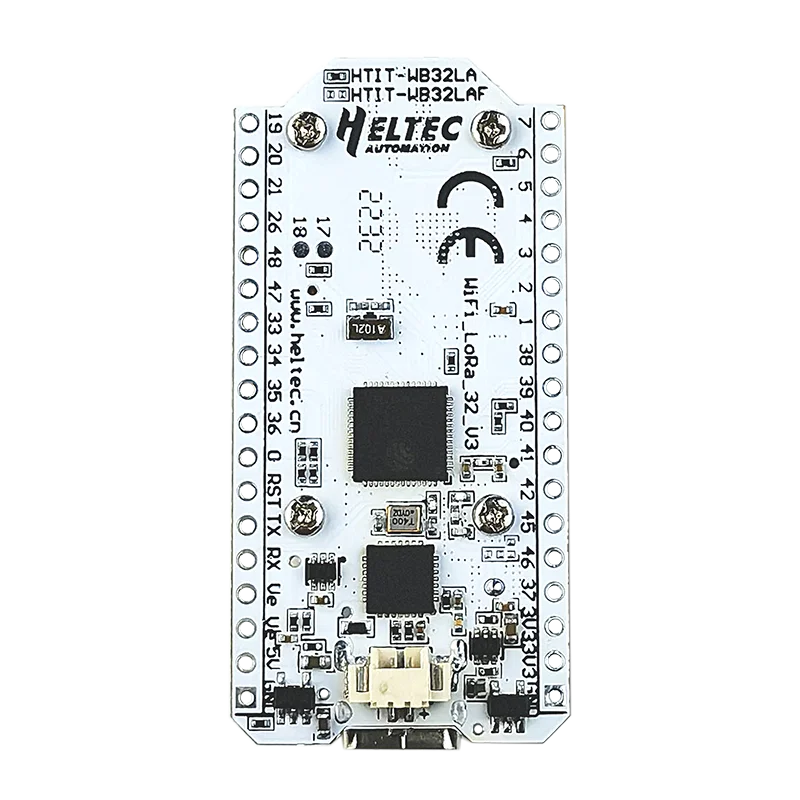
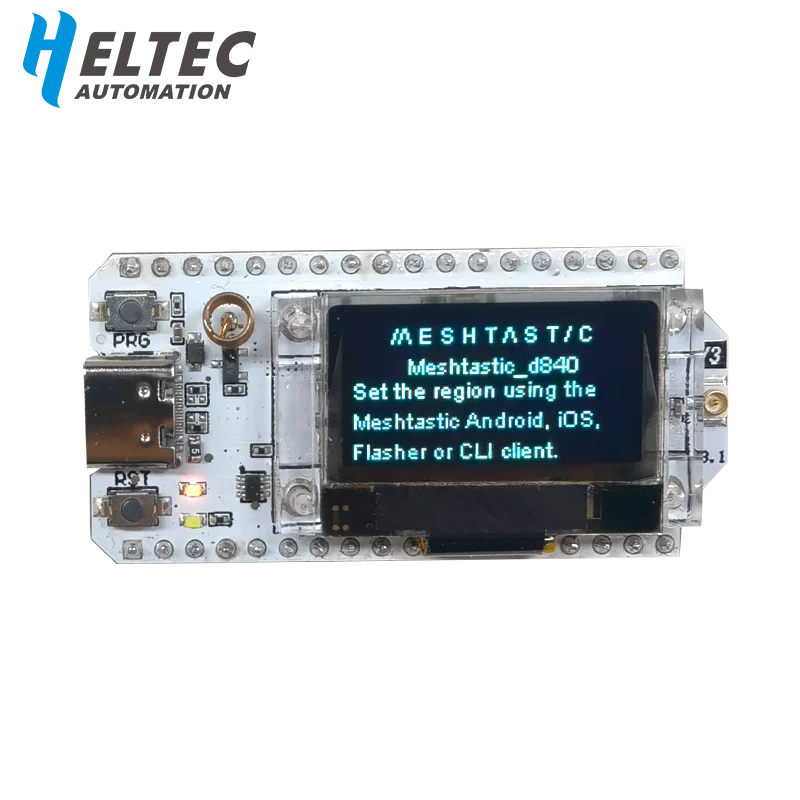
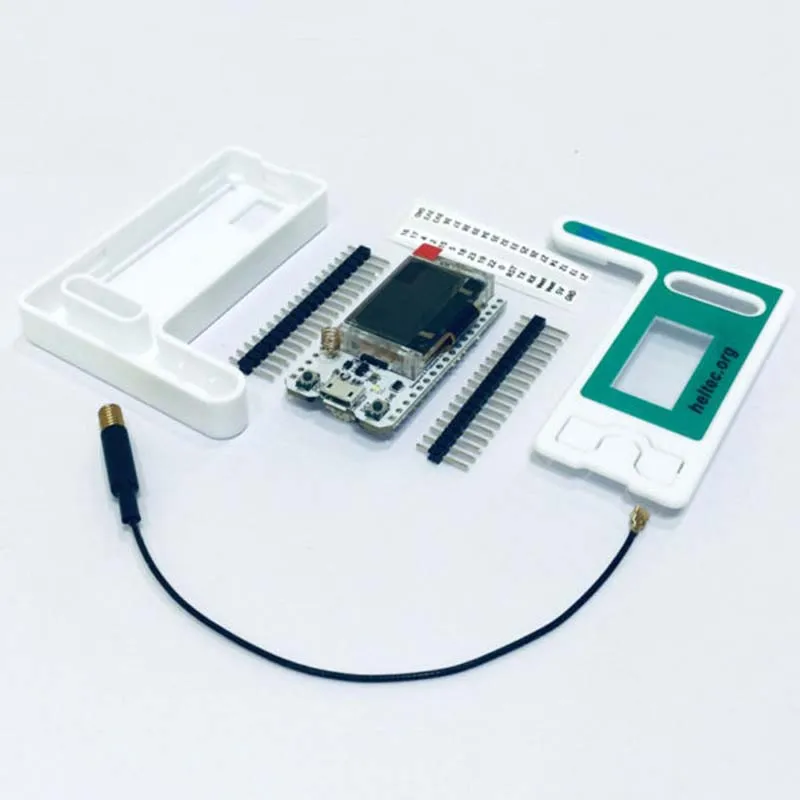
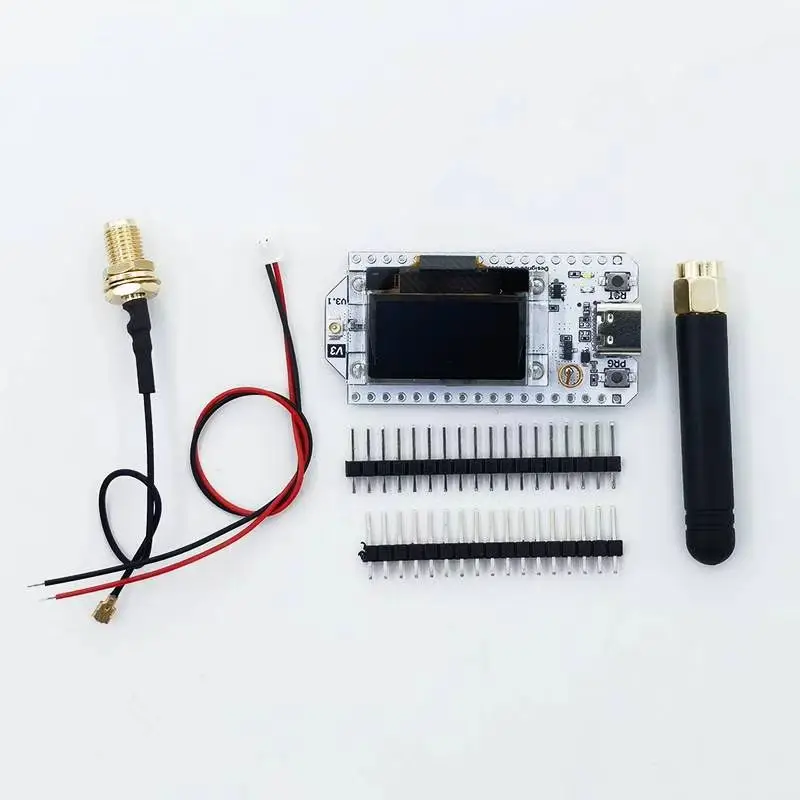
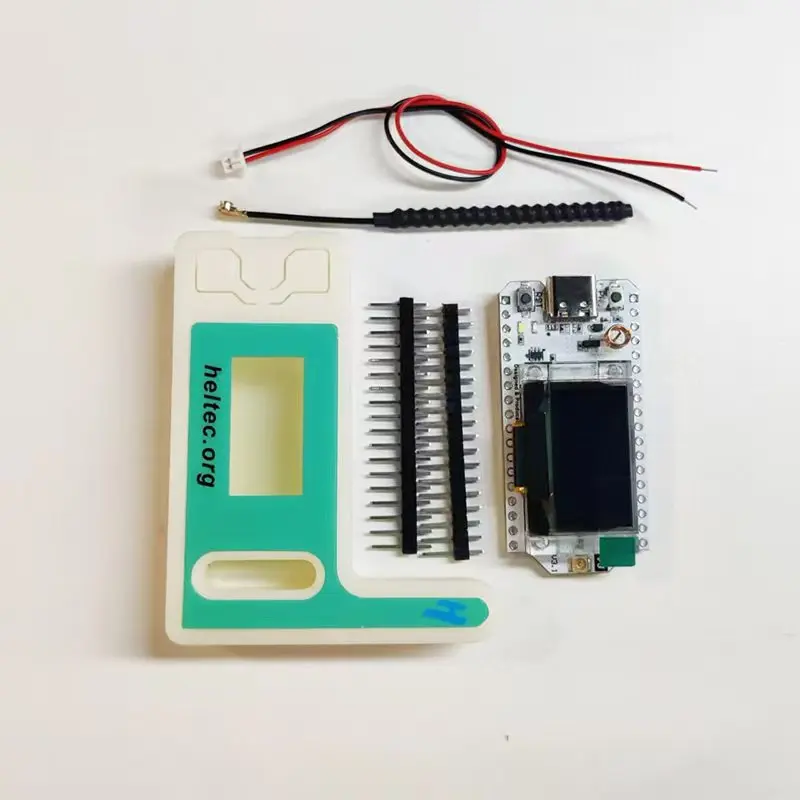
Meshtastic Wifi Heltec LoRa 32 V3 With Case 868MHZ ESP32 Oled SX1262 0.96 Inch Blue OLED Display Development Board for Arduino
Description
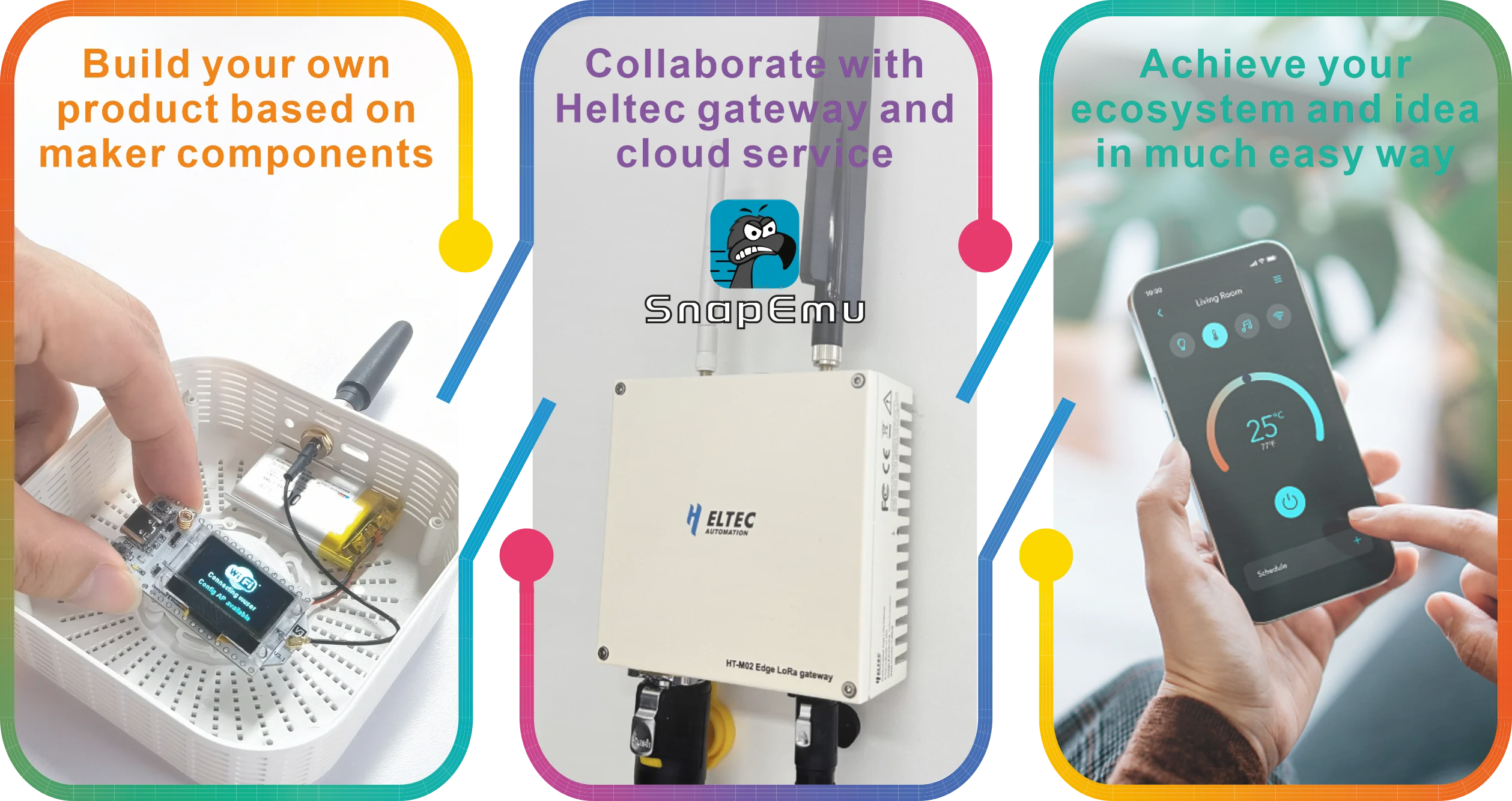
Why do we need Maker series products?
Summary
●WiFi LoRa 32(V3) is a classic IoT dev board designed & produced by Heltec Automation.
●Since its launch in 2017, it has been loved by developers and makers.
●Widely used in numerous excellent open-source projects and directly made into products for LoRa/LoRaWAN features.
●The newly launched V3 version has the same pin sequence as the V2 version and retains Wi-Fi, BLE, LoRa, OLED display, and other functions.
●It is the best option for smart cities, farms, homes, industrial control, house security, wireless meter reading, and IoT developers.
Heltec LoRa 32 V3 with Meshtastic Video
Main Features
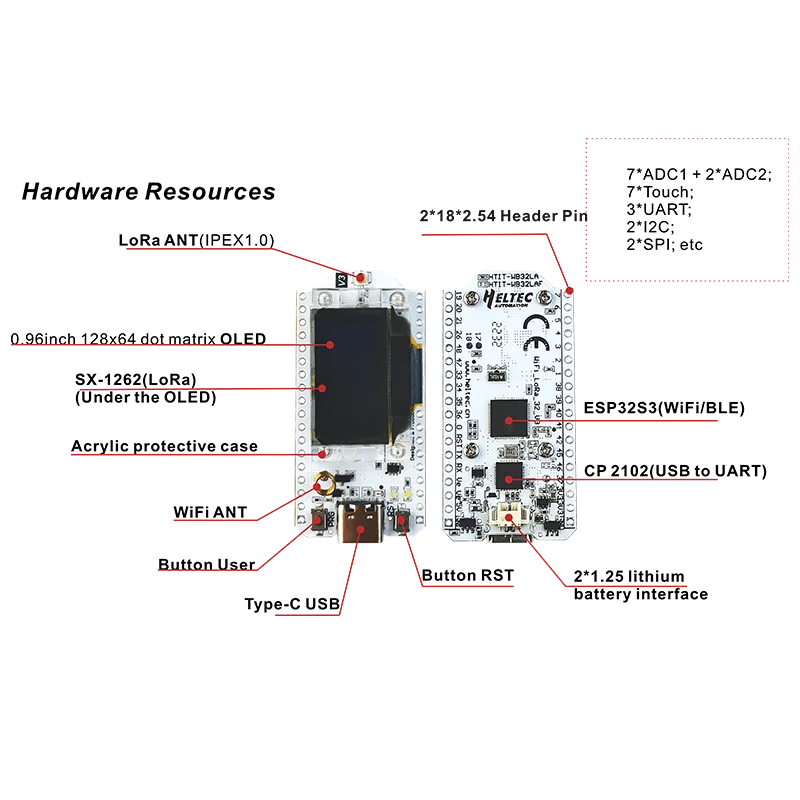
● Microprocessor: ESP32-S3FN8 (Xtensa® 32-bit LX7 dual-core processor, five-stage pipeline rack Structure, frequency up to 240 MHz).
● SX1262 LoRa node chip.
● Type-C USB interface with a complete voltage regulator, ESD protection, short circuit protection, RF shielding, and other protection measures.
● Onboard SH1.25-2 battery interface, integrated lithium battery management system (charge and discharge management, overcharge protection, battery power detection, USB / battery power automatic switching).
● Onboard 0.96-inch 128*64 dot matrix OLED display can be used to display debugging information, battery power, and other information.
● Integrated WiFi, LoRa, Bluetooth three network connections, onboard Wi-Fi, Bluetooth dedicated 2.4GHz metal spring antenna, reserved IPEX (U.FL) interface for LoRa use.
● Integrated CP2102 USB to serial port chip, convenient for program downloading, and debugging information printing.
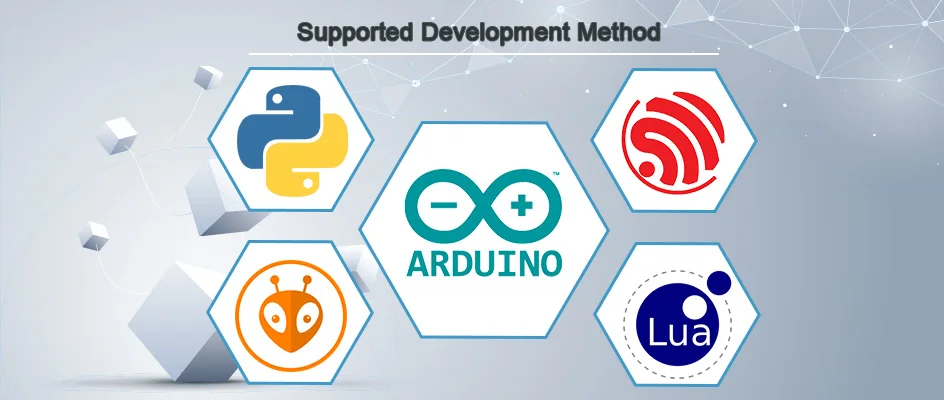
● Support the Arduino development environment.
● With good RF circuit design and low-power design.
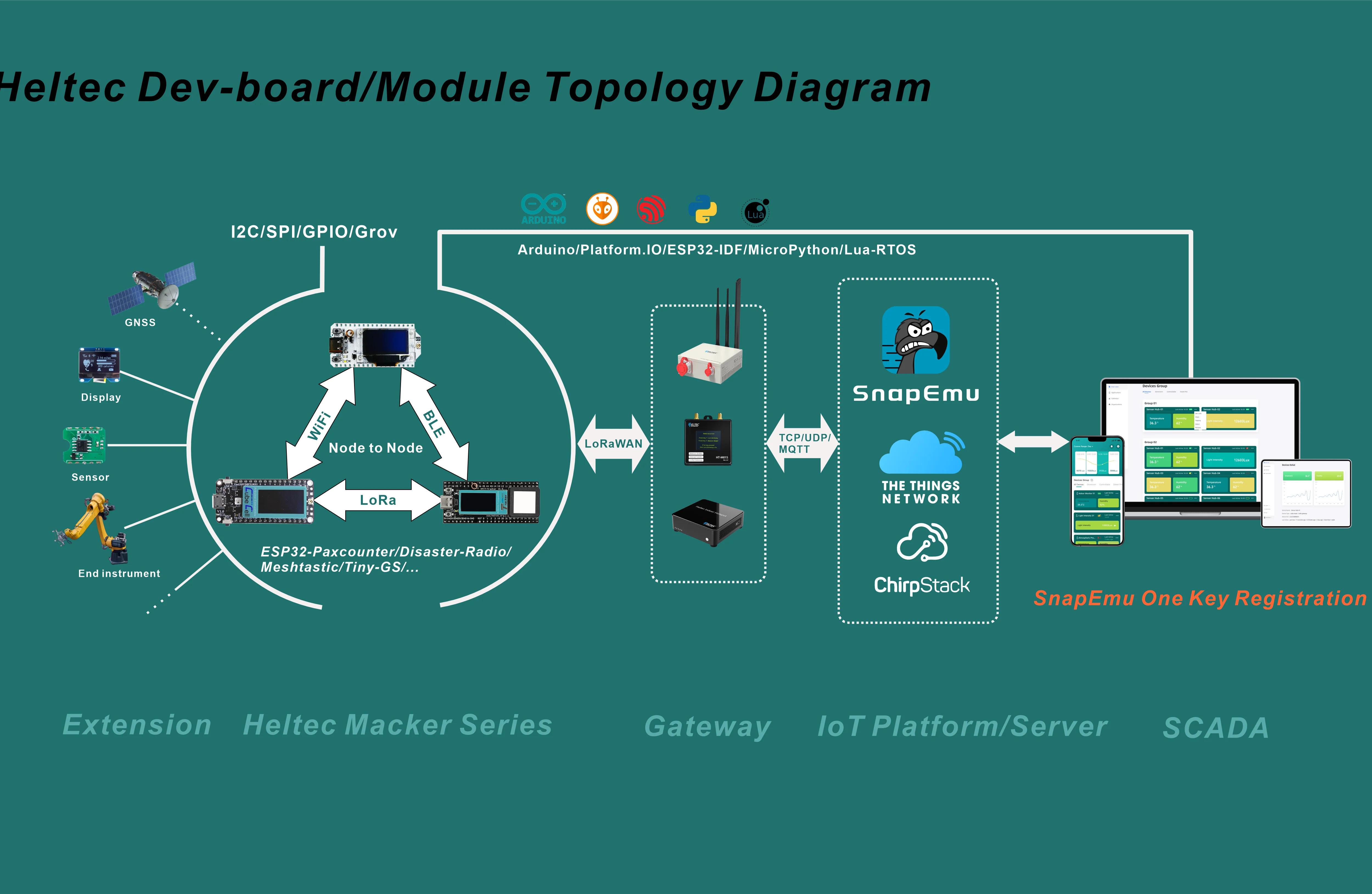
WiFi LoRa 32 (V3) supports the following development methods:
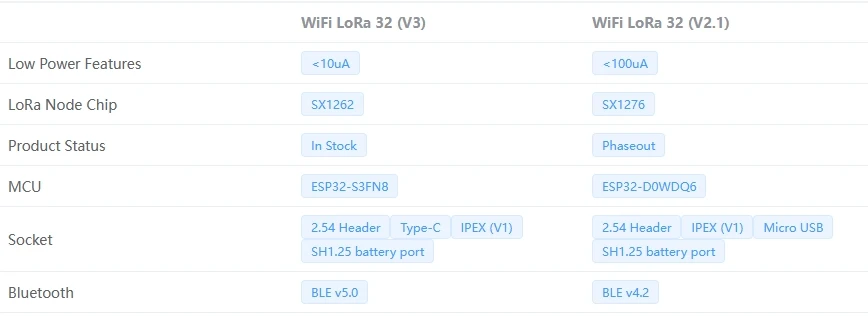
Compared to WiFi LoRa 32 (V2), V3 has made the following upgrades:
WiFi LoRa 32 is compatible with the following open-source projects:
●ESP32 Paxcounter
●Disaster Radio
●Meshtastic
●Tiny GS
●...
We also provide a standard ESP32 Arduino LoRaWAN library:
●Heltec ESP32 LoRaWAN
This library is already included in the Heltec ESP32 Arduino Framework by default.
Resource
●WiFi LoRa 32 V3 details on Heltec website
●Heltec ESP32 Arduino Framework(Include ESP32 Arduino LoRaWAN library)
●WiFi LoRa 32 V3 Documents
●Downloadable Resource
●Hardware update logs
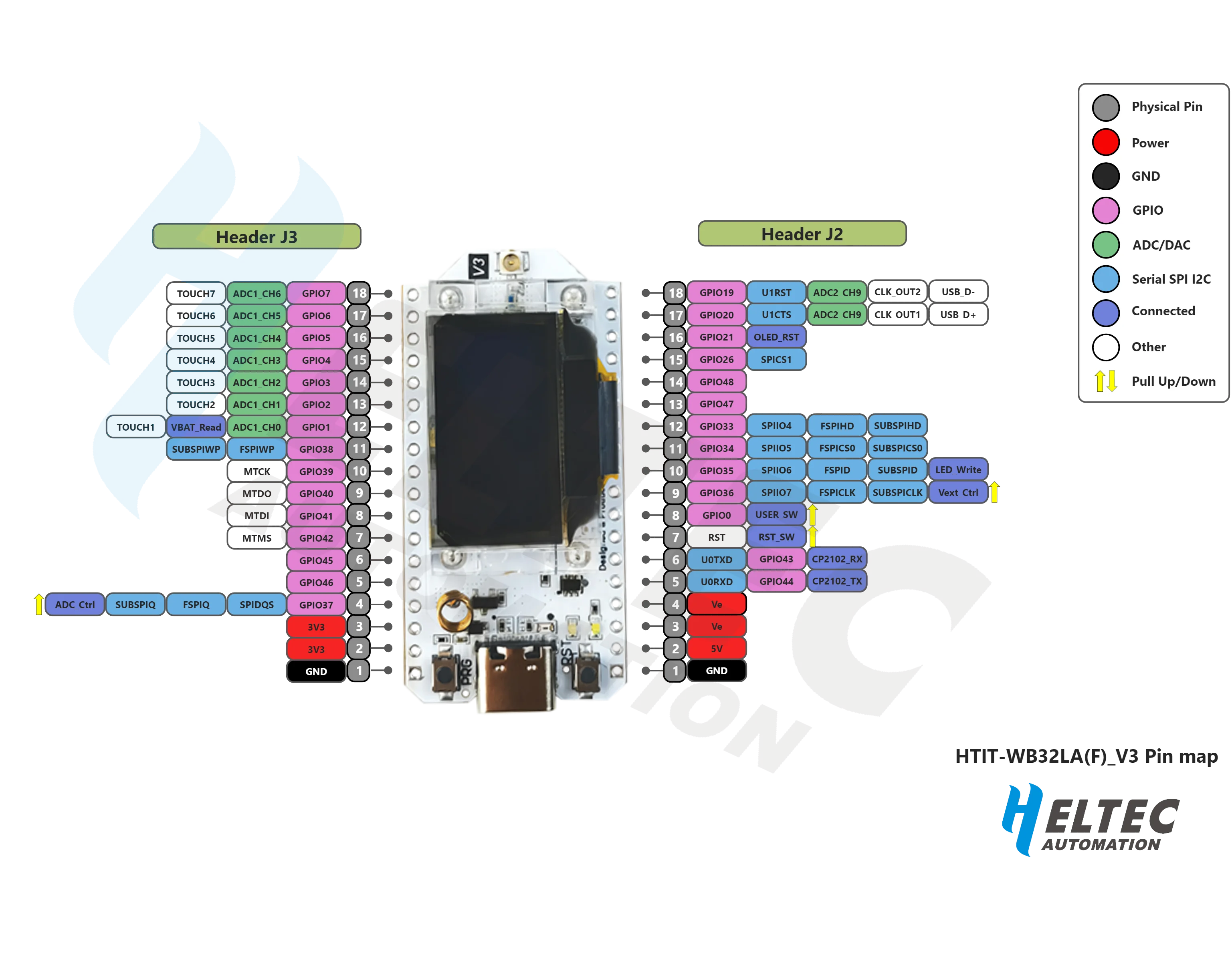
Pin Map
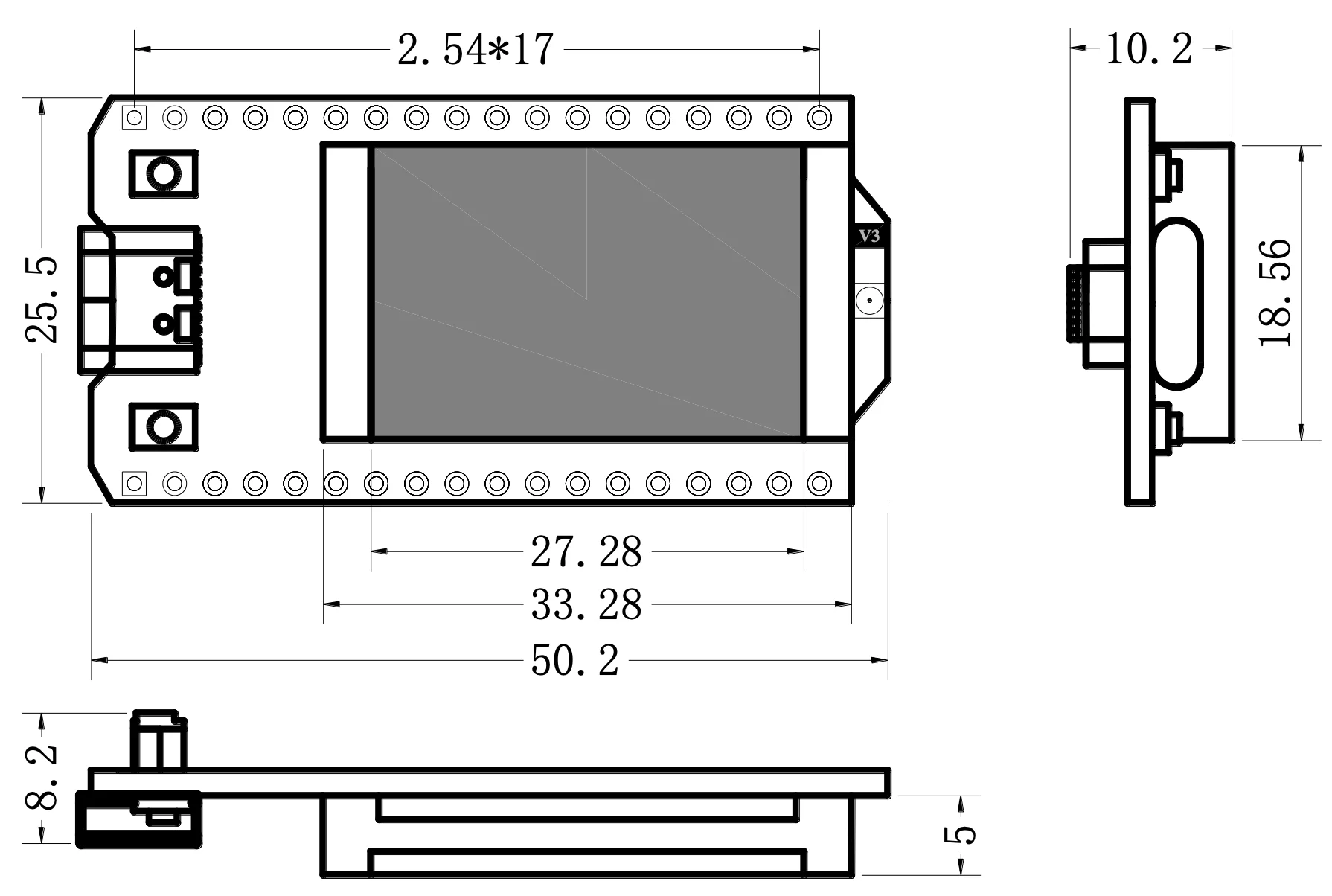
Dimension
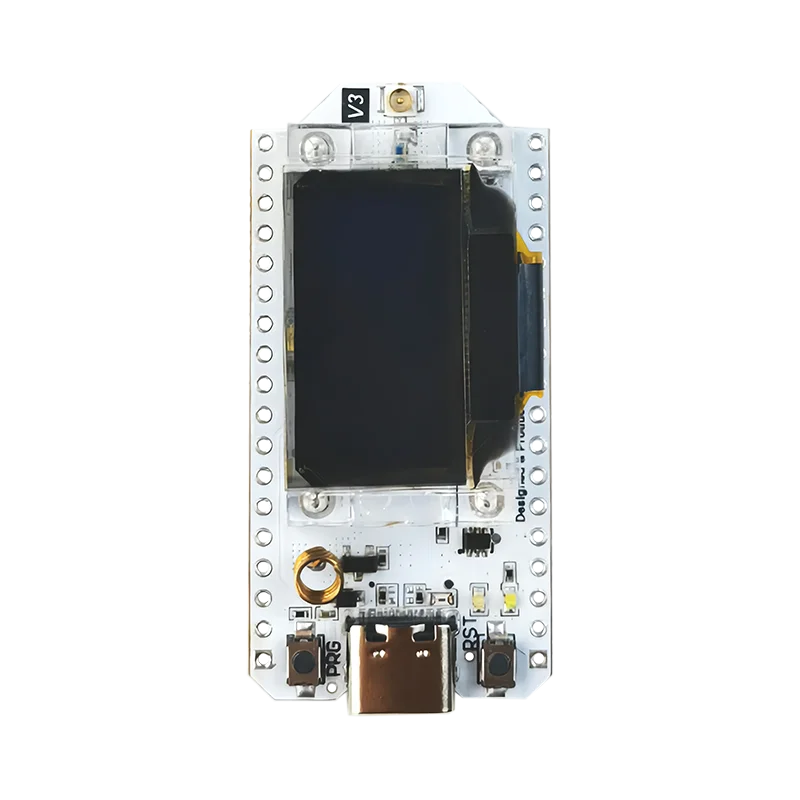
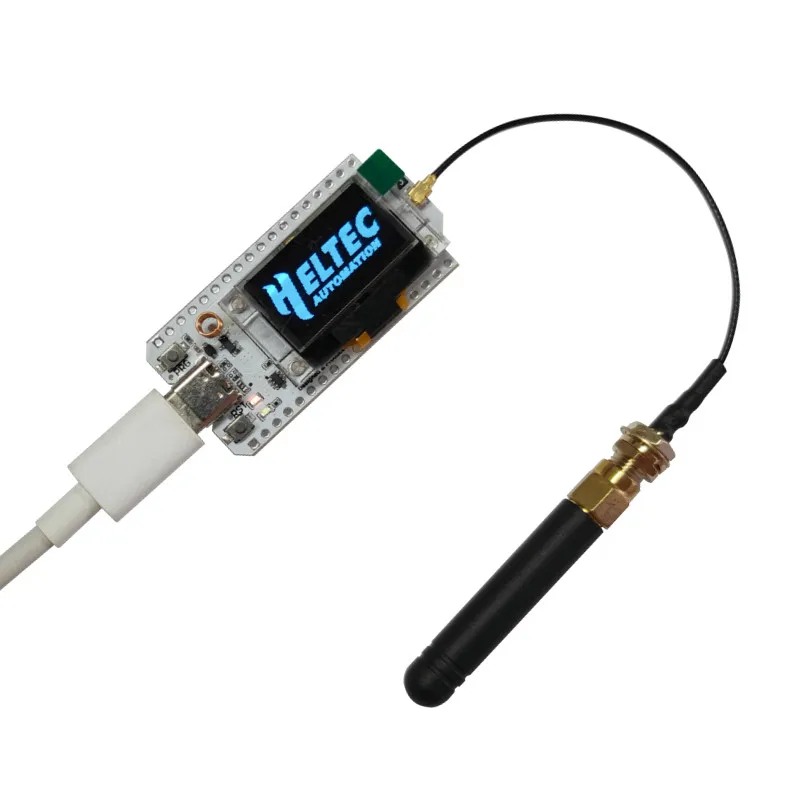
WIth Shell
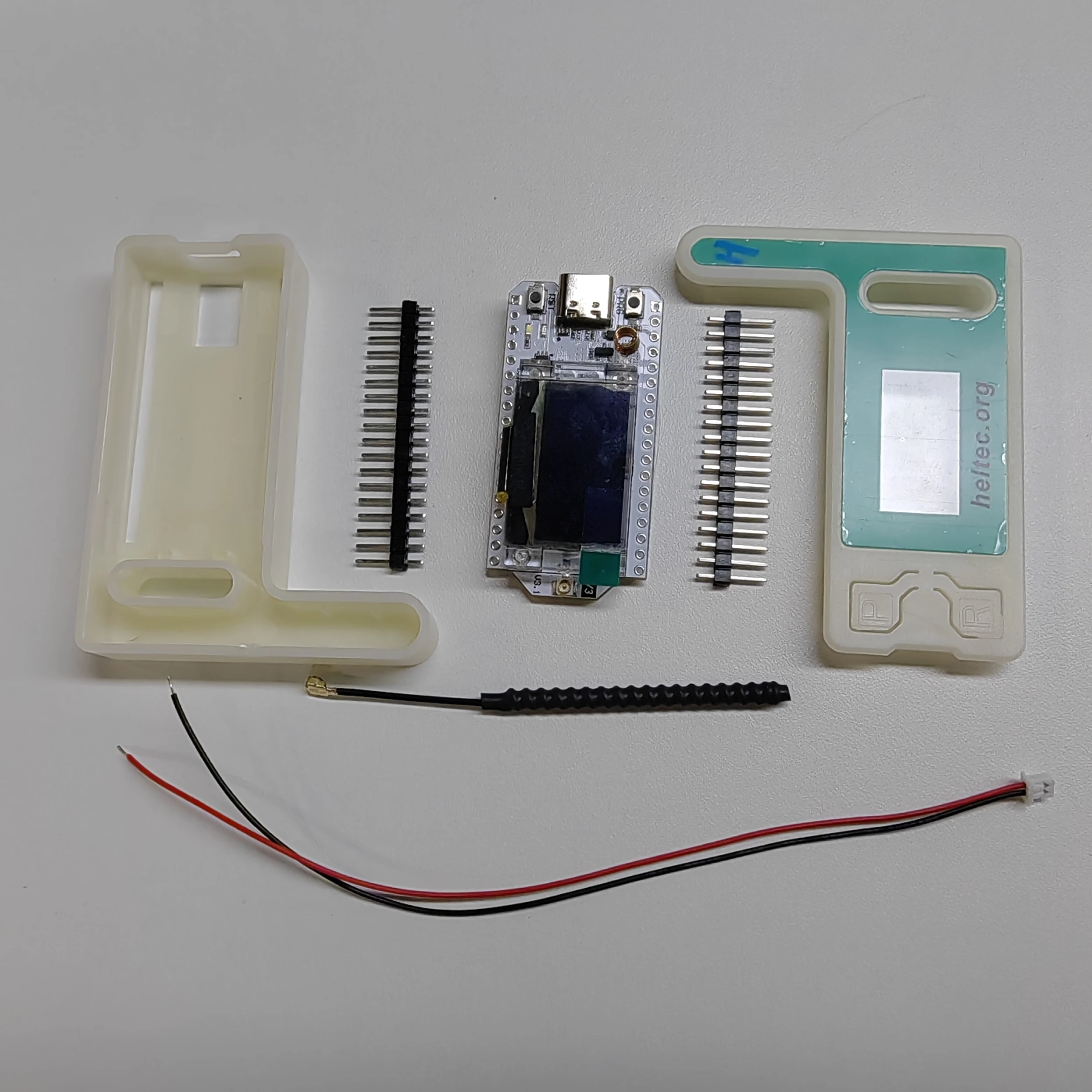
No Shell
Specifications
|
Parameters |
Description |
|
Master Chip |
ESP32-S3FN8 (Xtensa®32-bit lx7 dual core processor) |
|
LoRa Node Chip |
SX1262 |
|
USB to Serial Chip |
CP2102 |
|
Frequency |
470~510MHz, |
|
Max. TX Power |
21±1dBm |
|
Max. Receiving sensitivity |
-134dBm@SF12 BW=125KHz |
|
Wi-Fi |
802.11 b/g/n, up to 150Mbps |
|
Bluetooth |
Bluetooth 5 (LE) |
|
Hardware Resource |
7*ADC1 + 2*ADC2; |
|
Memory |
384KB ROM; |
|
Interface |
Type-C USB; |
|
Battery |
3.7V lithium battery power supply and charging |
|
Operating Temperature |
-20 ~ 70 ℃ |
|
Dimensions |
50.2 * 25.5* 10.2 mm |
Packing List
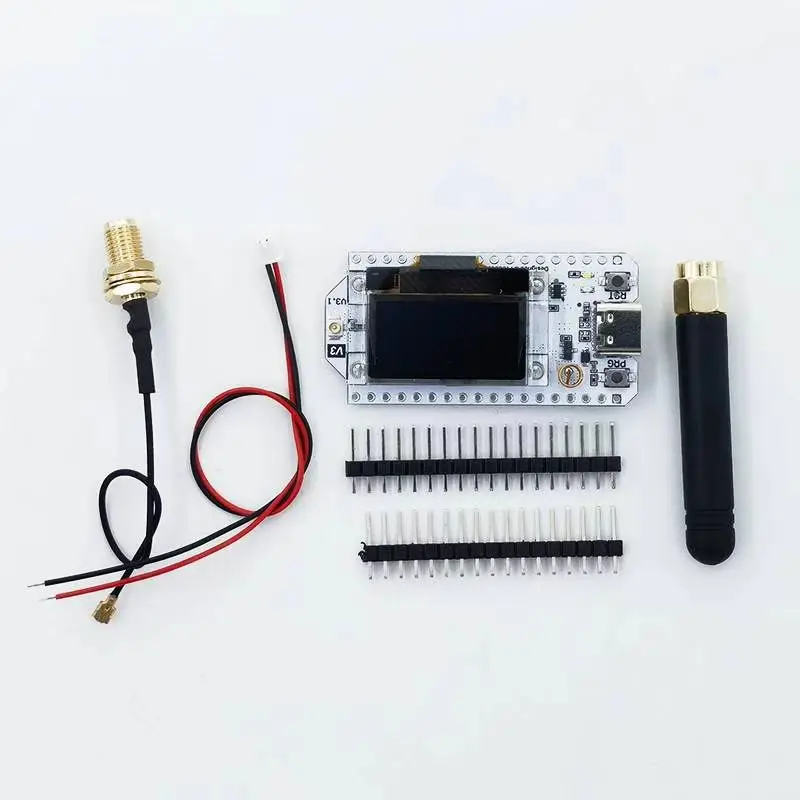
The default packing list without selecting any accessories is as follows:
|
Item |
Quantity |
|
WiFi LoRa 32 (V3) |
x1 |
|
LoRa Antenna |
x1 |
|
SH1.25×2 Battery Connector |
x1 |
|
2.54*18 Header Pin |
x2 |
FAQ
A1: No, the MCU is different.
A2: No, the WiFi LoRa 32 don’t have an external PSRAM, if your application need use Bluetooth and Wi-Fi at the same time, you can look into this product: Heltec Wireless Bridge.
A3: It’s caused by the meshtastic setting. Changing the default screen to SSD1306 can solve the problem.
The specific steps are as follows:
“Radio configuration”→”Display”→”Override OLED auto-detect”→”SSD1306”
A4: You can find this type of socket by search “SH1.25 x 2”.
A5: Arduino
Micro Python
Platform.io
Espressif IDE
We strongly recommend using Arduino. We have complete technical support and provide complete LoRaWAN code for ESP32 Arduino framework.
Q6: Can the onboard 2.4GHz antenna be replaced?
A6: The 2.4GHz antenna is a spring antenna, and there is no additional interface on the board for 2.4GHz wireless signals.
Original: $32.56
-70%$32.56
$9.77Product Information
Product Information
Shipping & Returns
Shipping & Returns
Description
Description
Why do we need Maker series products?
Summary
●WiFi LoRa 32(V3) is a classic IoT dev board designed & produced by Heltec Automation.
●Since its launch in 2017, it has been loved by developers and makers.
●Widely used in numerous excellent open-source projects and directly made into products for LoRa/LoRaWAN features.
●The newly launched V3 version has the same pin sequence as the V2 version and retains Wi-Fi, BLE, LoRa, OLED display, and other functions.
●It is the best option for smart cities, farms, homes, industrial control, house security, wireless meter reading, and IoT developers.
Heltec LoRa 32 V3 with Meshtastic Video
Main Features
● Microprocessor: ESP32-S3FN8 (Xtensa® 32-bit LX7 dual-core processor, five-stage pipeline rack Structure, frequency up to 240 MHz).
● SX1262 LoRa node chip.
● Type-C USB interface with a complete voltage regulator, ESD protection, short circuit protection, RF shielding, and other protection measures.
● Onboard SH1.25-2 battery interface, integrated lithium battery management system (charge and discharge management, overcharge protection, battery power detection, USB / battery power automatic switching).
● Onboard 0.96-inch 128*64 dot matrix OLED display can be used to display debugging information, battery power, and other information.
● Integrated WiFi, LoRa, Bluetooth three network connections, onboard Wi-Fi, Bluetooth dedicated 2.4GHz metal spring antenna, reserved IPEX (U.FL) interface for LoRa use.
● Integrated CP2102 USB to serial port chip, convenient for program downloading, and debugging information printing.
● Support the Arduino development environment.
● With good RF circuit design and low-power design.
WiFi LoRa 32 (V3) supports the following development methods:
Compared to WiFi LoRa 32 (V2), V3 has made the following upgrades:
WiFi LoRa 32 is compatible with the following open-source projects:
●ESP32 Paxcounter
●Disaster Radio
●Meshtastic
●Tiny GS
●...
We also provide a standard ESP32 Arduino LoRaWAN library:
●Heltec ESP32 LoRaWAN
This library is already included in the Heltec ESP32 Arduino Framework by default.
Resource
●WiFi LoRa 32 V3 details on Heltec website
●Heltec ESP32 Arduino Framework(Include ESP32 Arduino LoRaWAN library)
●WiFi LoRa 32 V3 Documents
●Downloadable Resource
●Hardware update logs
Pin Map
Dimension
WIth Shell
No Shell
Specifications
|
Parameters |
Description |
|
Master Chip |
ESP32-S3FN8 (Xtensa®32-bit lx7 dual core processor) |
|
LoRa Node Chip |
SX1262 |
|
USB to Serial Chip |
CP2102 |
|
Frequency |
470~510MHz, |
|
Max. TX Power |
21±1dBm |
|
Max. Receiving sensitivity |
-134dBm@SF12 BW=125KHz |
|
Wi-Fi |
802.11 b/g/n, up to 150Mbps |
|
Bluetooth |
Bluetooth 5 (LE) |
|
Hardware Resource |
7*ADC1 + 2*ADC2; |
|
Memory |
384KB ROM; |
|
Interface |
Type-C USB; |
|
Battery |
3.7V lithium battery power supply and charging |
|
Operating Temperature |
-20 ~ 70 ℃ |
|
Dimensions |
50.2 * 25.5* 10.2 mm |
Packing List
The default packing list without selecting any accessories is as follows:
|
Item |
Quantity |
|
WiFi LoRa 32 (V3) |
x1 |
|
LoRa Antenna |
x1 |
|
SH1.25×2 Battery Connector |
x1 |
|
2.54*18 Header Pin |
x2 |
FAQ
A1: No, the MCU is different.
A2: No, the WiFi LoRa 32 don’t have an external PSRAM, if your application need use Bluetooth and Wi-Fi at the same time, you can look into this product: Heltec Wireless Bridge.
A3: It’s caused by the meshtastic setting. Changing the default screen to SSD1306 can solve the problem.
The specific steps are as follows:
“Radio configuration”→”Display”→”Override OLED auto-detect”→”SSD1306”
A4: You can find this type of socket by search “SH1.25 x 2”.
A5: Arduino
Micro Python
Platform.io
Espressif IDE
We strongly recommend using Arduino. We have complete technical support and provide complete LoRaWAN code for ESP32 Arduino framework.
Q6: Can the onboard 2.4GHz antenna be replaced?
A6: The 2.4GHz antenna is a spring antenna, and there is no additional interface on the board for 2.4GHz wireless signals.